This is from Biren Mukerjee’s memoirs, a collection of fourteen short pieces in which he narrates his experiences and adventures in the form of stories. Boro Dhemo is the name of a little village where he did his apprenticeship, his first mine experience.
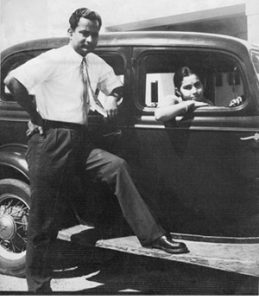
I first heard about it from Meghua—how both his arms were severed on the railway track. He, of course, had heard the story from his older sister Saraswati and his mother. Akshaybabu himself never told me about the incident. Let me start at the beginning.
Meghua had just turned two. A restless, naughty boy, he was his parents’ third child. His mother and father were both tribals, wagon loaders working for Akshay’s Colliery. Their team comprised about fifteen people. When the empty wagons arrived and were parked on the siding of the railway tracks, these men and women would come from their basti (colony) in a large group, children in tow. They would seek shelter under the big banyan tree next to the siding. There they set up temporary homes and cooked their meals. When the adults got busy with work, the older children took care of the younger ones.
It was summer and under the banyan tree, the loaders’ families were bustling. Someone stirred boiling rice with a stick, others put babies to sleep or finished chores. The rest were loading coal into the empty wagons across the tracks. The day was intensely hot. The loading clerk, Akshaybabu, was at his wits’ end trying to oversee the porters. Five wagons had arrived that day. There was no shortage of coal, but if all the wagons were not loaded and sealed by dusk, the company would be fined heavily. Akshaybabu took out fresh wads of rupees from his own pocket, handed them to the gang leader, and said, “Go, fetch some Haria.”1
His two older sisters struggled to manage the restless little Meghua. When he finally fell asleep, they laid him down carefully in the shadow of an empty wagon. They still had much to do before the adults returned to eat.
With the arrival of Haria, the loaders resumed work with renewed energy. Each time a wagon was filled, Akshaybabu would shut and seal the lid and stamp it. The platform was long, and the colliery trucks dumped coal wherever they could. The empty wagons had to be moved up and down to bring them close to the coal heaps. This job too was done by the loaders.
The first wagon had been loaded and pushed aside. Just as the second wagon was being moved into place, a piercing scream tore through the afternoon sky. Little two‑year‑old Meghua’s arms were caught under the wheels of the moving wagon and severed—his left arm below the elbow, his right above the wrist.
Akshay was standing on the platform on the other side of the tracks. He jumped down, picked up the bleeding child, wrapped his arms around him and ran toward the office. The rest of the people standing around, started running behind him. Six‑year‑old Saraswati could not leave behind her brother’s severed arms; she picked them up and ran after the others, though they were far ahead by then.
I heard this story from Meghua himself. Akshay was a shy man; he never spoke about himself. His youngest son, Ashok, was about the same age as Meghua. The accident broke Akshay. He believed he was personally responsible for he was the loading clerk and in charge of all the loaders. I never found any account of how Meghua survived but I learned that after admitting him to the hospital, Akshaybabu rushed to his ancestral home in Bankura2 to raise money for the treatment. He found none and was forced to sell a bit of his inherited land. After Meghua was released, he brought him home and raised him along with his four children.
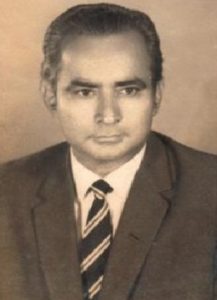
I arrived at the Boro Dhemo colliery as an intern in May 1942. I had been admitted to the School of Mines in Dhanbad, but the area around the school was under British Indian Army control, so we had to spend the first year apprenticing in a colliery. After getting off at Asansol 3 station, I reached Boro Dhemo, three miles away, in a horse cart. It was mid‑afternoon when I got down and sat on the veranda of the office, which was closed. Hungry and thirsty, I took out the food Ma had packed in a banana leaf and ate. A well stood nearby, and I quenched my thirst.
Around three, the office opened. An elderly man—the head clerk—asked who I was. He knew I was coming. “Please wait, the Manager will come,” he said. Around four, the Manager arrived and handed me back to the head clerk. “I will call the loading clerk who will make all arrangements for you,” the clerk said. A little later, the loading clerk arrived. That was my first meeting with Akshaybabu: thin, sprightly, cheerful, with sharp, intelligent eyes and a big white moustache from which two canine teeth jutted out. Clad in short dhoti and half‑shirt, and wearing frayed, dust‑covered slippers, he looked between fifty and fifty‑five.
He introduced himself as Akshay Sarkar. “I will arrange coal, water, oven, pots and pans—you seem to need everything,” he said, and left.
In the Boro Dhemo Colliery, my lodge was at the edge of the workers’ barracks, in the last of the three small thatched roofed living quarters. In front of the room, attached to the thatched roof was a small paved veranda and a seat, behind which was my bedroom and sitting room. At the back, alongside another small veranda were two more rooms. Then a small yard at the end of which were toilet and bathroom. There was no furniture and no electricity. It was quite evident that no one had lived in these rooms in a long time. The source of water for all the rooms, was a well close by. The porters’ barracks were on the same road that went past our thatched houses and the well towards the railway lines in the east.
I had few belongings: a suitcase, a bedroll, some books, a small bundle of odds and ends, and a shoulder bag. The unwashed, unmaintained walls gave the place a dilapidated look.
After a couple of hours, Akshaybabu returned with what felt like an entire regiment: earthen pots, a pitcher, a jug, spoons, ladles, a wok, a coal oven, a bed, and a basket of coal. He removed every hurdle in my way. “I’ll get you electricity by pulling a wire from the pole outside—but not today. Today I’ll get you a hurricane lamp.” After many years, the dark room lit up. That night, dinner was arranged at his home. That was when I met Meghua for the first time—dark‑skinned, thin, short, about sixteen. His left arm ended at the elbow; on his right wrist, a small two‑inch finger protruded, with which he managed many tasks. Akshaybabu tried his best to educate him along with his other children. That year, he was to appear for his matriculation exam.
One day, Akshaybabu brought with him a handsome young man of seventeen or eighteen—Dhananjoy Bouri, or Dhona—who worked as a line porter. “He will be your ‘Man.’ No question of money. He will stay with you and eat here—that is enough.” I learned that Dhona’s mother was caretaker to the Manager and lived in a nearby village.
Until then, I had been alone. Now we were two. Dhona could read and write a little. Even if he didn’t understand Bengali well, he could read the script. Together with Meghua, I began teaching him too. He had a special gift—he sang beautifully, with an endless repertoire of folk songs. While cooking or mopping, he sang softly. I loved it. Whenever I tried to pay him, he would stick out his tongue, hold his ears with both hands, and stand contrite until I dropped the subject.
Thus my household was established. Shopping, running errands, making arrangements—I left everything to Dhona. His cooking improved steadily. With Akshaybabu’s family’s generosity, my days passed in comfort.
Light, stick, cap, safety lamp—these became part of my daily attire. The tunnels of the Dhemo pit gradually became my working home. Daylight was replaced by the darkness underground.
One morning, as I waited for the cage to descend, a tall, fair, handsome man of about thirty approached and said, “Namaskar, Mukherjee Saheb. I am Durgacharan Bhattacharya, attendance clerk here for six years. How long will you stay?”
“I don’t know.”
“May I visit you sometime?”
“Of course.”
The cage arrived, and the conversation ended.
The next day, as I was leaving for work, Durgacharan appeared with a packet of muri,4 an earthen pitcher, and a bunch of tuberoses. “Only the pitcher is bought—the rest are from my home,” he said with a smile. After that, he visited often, always bringing something—vegetables, a magazine.
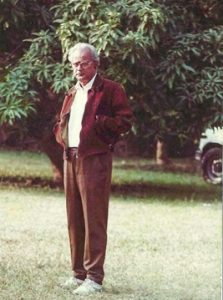
My days in Boro Dhemo passed well. Sometimes I went to Asansol to buy books for Meghua and Dhona and brought back a few things. I missed home and felt sad at times, but overall I was happy. Soon after I joined the School of Mines, the Government of India granted me a scholarship of sixty rupees a month—a princely sum then. If it arrived on time, I had no worries. But it rarely did. Sometimes it took over two months. Those months were agonising. I had no one to ask for help. I survived on water and muri. I tried to hide my situation from Akshaybabu and his family. In this collusion, Dhona was an eager participant. Suddenly, the situation changed with the arrival of two months’ money. Then who could stop us? The happiness that money brought touched Durgacharan and Akshaybabu as well.
Dhona never called me Dada or Sir. To him, I was Saheb—the title, he felt, gave me the respect I deserved. Once, after two months’ money arrived, he came to me hesitantly. Suddenly he dropped to the ground, held my feet, and said, “Saheb, I have made a big mistake. Please forgive me.”
“What happened?”
“I bought a bottle of alcohol and a chicken to feed Akshaybabu.”
“Do you know if he drinks?”
“Yes.”
“Then you did the right thing. Go tell him he will dine with us tonight.”
That night, I saw another side of Akshaybabu. He became a different person. We had a proper evening gathering. I don’t recall the exact card game, but there were only twenty‑seven or twenty‑eight cards in the pack. For the first time, I discovered his incredible memory. After every deal, he would carefully pick the cards up, and then arrange them by placing one card on top of the other and while doing that, the impression of the cards -which card follows the other- was imprinted in his mind. Once the cards were distributed, he could say who held which cards. I remember the joyful evening vividly—and Dhona’s wonderful performance.
In the company of Akshaybabu, Borobabu, Dhona, and Durgacharan, my days passed well. Monsoon arrived. On the first day of rain, we discovered the roof above my bed leaked. Akshaybabu stood by me.
I had been away from home a long time. During the rains, sitting on the parapet outside my room, memories flooded back—the patch of garden we had levelled into a football field, my friends, the green expanse in front of our house. After a long period, I kind of felt for the first time that it was time to return home.
The monsoon months of Ashar, Sravan, and Bhadra (July, August, September) passed, but the rains did not lessen. One Sunday, the mine was closed. Early Monday morning, Akshaybabu woke me. “Mukherjee Saheb, there has been a disaster! Boro Dhemo is gone.” He sat down in the chair in front, in despair.
“Why? What happened?”
“The paddy field had a few feet of water from last night’s rain. Through a crevice in the middle of the field, water entered the pit and flooded it. Luckily it was Sunday—no one was inside.”
We ran to the pit. A large crowd had gathered. Thirty feet below, water gushed through a side tunnel with tremendous force. I realised that the seam of coal that was being dug lay below another seam where work had already begun a while ago. The gap between the upper seam and the paddy field was small. The monsoon water found a weak point, broke through, and rushed into the old mine. The mouth of the old mine opened directly into the entrance of the current one, thirty feet below.
I never knew my relief would come so quickly. The joy of going home vanished. The pain of leaving Boro Dhemo filled my heart. Soon a notice was put up: “For an indefinite period, the Boro Dhemo colliery has been shut down. All staff must report to the office.” I did not know what “report” meant—job loss, transfer? I worried for Akshaybabu, Dhananjoy, Durgacharan, and especially for Akshaybabu’s family of eleven, for Meghua.
That night, I packed my few belongings and spent a long time with Akshaybabu and the senior clerks. When I went to bed, Dhananjoy sat silently holding my feet. A tonga had been booked. Early in the morning, the head clerk, Durgacharan, Akshaybabu, and his entire family came to say goodbye. There was no sign of Dhananjoy. We searched everye around the house but he could not be found. Everyone bid farewell in silence. Only Meghua wailed like a child.
Boro Dhemo fell behind me.
The collection which Biren Mukerjee named Akash, Patal, Jol Jongle (Heaven and Earth, Water and Woods) in Bengali is being translated into English for publication.
Footnotes
- Country liquor
- A district town in West Bengal
- A major railway junction, about 200 kms northwest of Kolkata
- Puffed rice
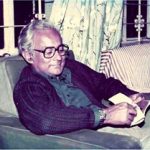
Born on 28th August 1925, Shri Biren Mukerjee obtained his Degree in Mining Engineering from Indian School of Mines (ISM), Dhanbad in the year 1947, as well as his First Class Mine Managership from the same institution.
After serving as Assistant Manager and Manager in various private coal companies, he joined the Department of Mines, Govt of India as Junior Inspector of Mines in January 1953. He served with the Inspectorate till December 1958.
Some of his earliest assignments (as entrusted by the then Director General of Mines Safety), was to carry out search and rescue operations after a mining accident, as well as investigate the cause of the accidents. The major cause of accidents in this era were due to gas explosions, and hundreds of lives were lost. His investigations revealed that the major cause of gas explosions were lack of technology, safe equipment, spares availability, and proper training.
Biren Mukerjee made it his life’s mission to develop safe, sustainable, affordable Indian flameproof equipment for Indian miners. He was able to reduce imports to a large extent, and make Indian mines self-sufficient as well as Indian miners safe. His experience as the General Manager of Kilburn, (Later Macneill and Magor) the leading British company for importing such equipment, brought focus to the industrial needs.
In May 1978, he founded the company Mine Line for manufacturing flameproof equipment, ancillaries & connectors for underground mines as a proprietorship firm, a fledgling small scale unit by investing his entire life’s savings.
He was the pioneer in flameproof technology for the Indian mines, and a total expert in the subject, his thought process could seamlessly flow between mechanical, mining and electronics to create the flameproof equipment and components, in the most effective way. He led the company from a small cottage industry, to a pioneering manufacturer in the next ten years. His leadership skills were unbelievable, and his team believed in him completely.
Till his demise on the 8th May 2018, he dedicated his expertise & knowledge in development & manufacturing electrical equipment, ancillaries & components for safety of underground miners.
His passion and zeal has driven the country towards self-sufficiency in terms of technology. Mine Line today caters to 80% of the domestic market for flameproof underground equipment.
Biren Mukerjee was an accomplished golfer, an expert marksman, a keen angler, a self-taught rosarian and horticulturist, a philanthropist with a zeal to help others, a distinguished mining engineer who received the MGMI (Mining, Geological & Metallurgical Institute of India) President’s gold medal for outstanding service to Indian mines, a versatile writer; the list goes on and on.
Beautifully expressed emotions.
The narrative got me visualizing Boro Dhemo and to eagerly await the rest of the stories.
Amazing short story – ranks with some of the best I hv read